
 en
en
 Vietnamese
 English
 Chinese
Effortless Quartz Clean & Maintain: How to Remove Stain From Quartz?
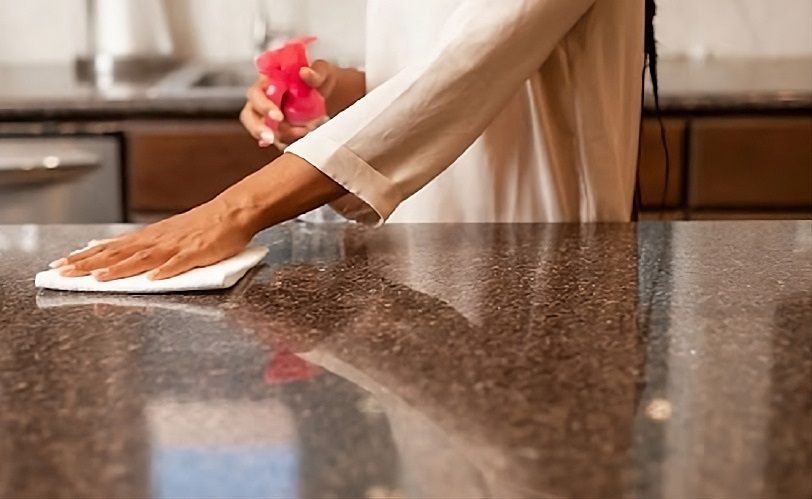
Effortless Quartz Clean & Maintain: How to Remove Stain From Quartz?
Understanding the proper techniques for removing stains from quartz countertops is crucial in maintaining their aesthetic and value without causing damage. If you're puzzled about how to tackle those stubborn marks, fear not, as the key to a spotless quartz surface lies in employing the right cleaning agents and methods.
5 Simple Steps to Remove Tough Stains From Your Quartz Counters
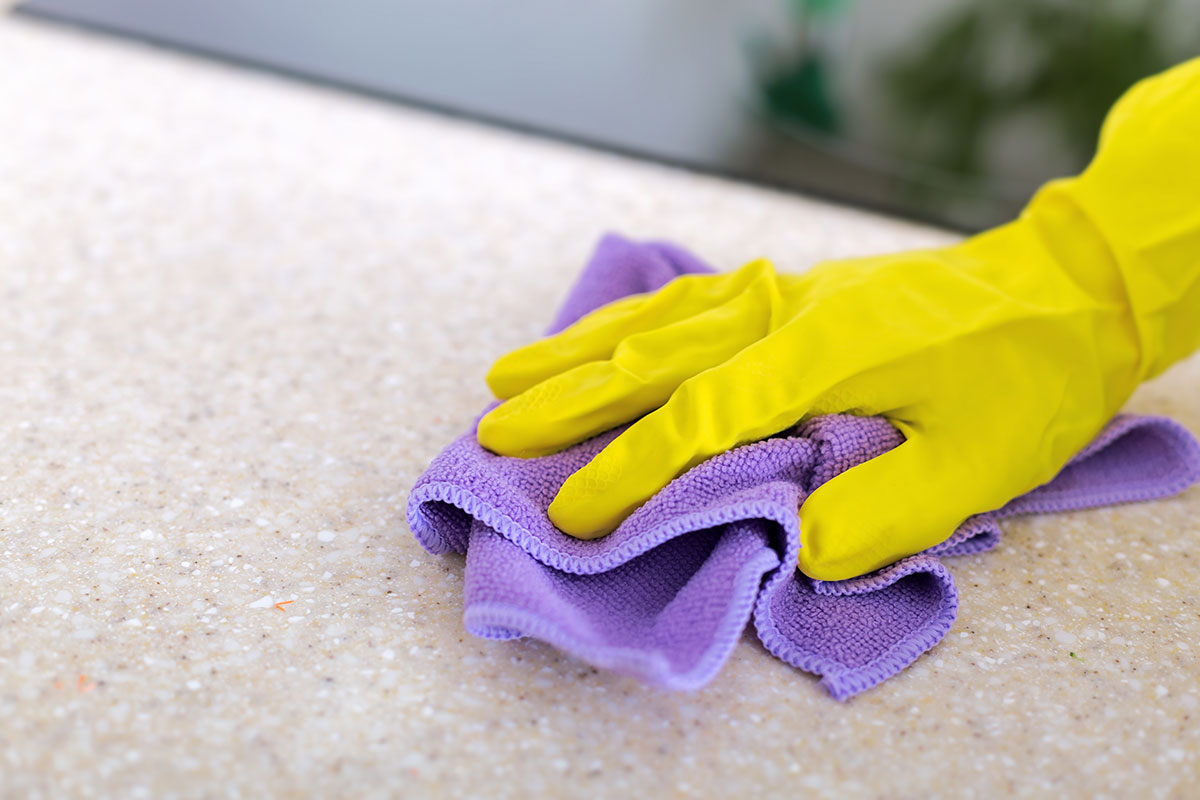
Step 1: Deep Clean Quartz With A Glass Cleaner
If your quartz countertops are looking less than stellar due to stubborn stains, fear not. Glass cleaner can be an effective solution for a deeper clean than your daily routine. Apply a quartz-safe glass cleaner generously, allowing it to sit for a few minutes to penetrate any grime. However, it's crucial to check with your countertop's manufacturer before using glass cleaner since recommendations can vary. For precaution, spraying the cleaner on a cloth rather than directly on the counter can prevent any potential damage from harsh chemicals.
Deep Clean Quartz With A Glass Cleaner
Step 2: What Type of Stain on Your Quartz Countertop
Identifying the type of stain on your quartz countertop is key to removing it effectively. Different stains, from oils and greases to ink and wine, may necessitate tailored treatments. By pinpointing whether the blemish is a dried-on spot, a greasy film, or perhaps pen marks, you can choose the most appropriate cleaning agent and technique. Warm water and dish soap are effective for many stains, but others might require a specialized cleaner or a homemade paste. Remember, the faster you address the spill, the easier it will be to remove the stain.
Step 3: Use Isopropyl Rubbing Alcohol
For tougher stains that won't budge with standard glass cleaner, isopropyl rubbing alcohol can be your hero. When used correctly, it's a safe and efficient way to combat challenging spots. Dampen a soft cloth with a bit of the alcohol and gently rub it onto the stained area. This method is particularly effective for removing substances like ink, makeup, or sticky residues. Next, rinse the countertop with warm water to remove any remnants of the alcohol. The goal is to treat the stain without compromising the integrity of the quartz's surface, so always proceed with care and avoid abrasive tools or harsh scrubbing motions.
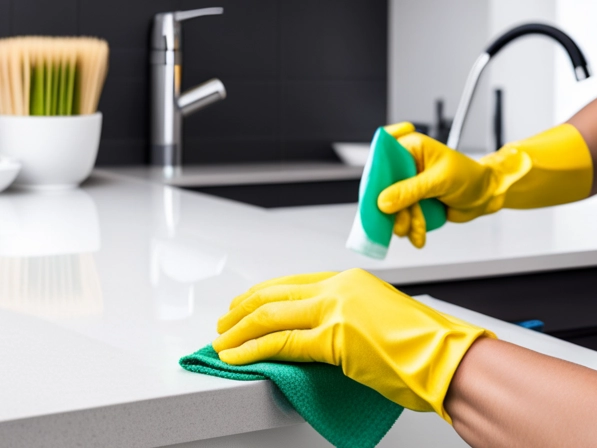
Step 4: Deep clean with a Glass Cleaner
To deep clean and restore the luster of your quartz countertops, a thorough application of a glass cleaner can be quite effective. After verifying that your specific brand of quartz can handle glass cleaner without damage, spray the cleaner on the surface or onto a soft cloth to avoid oversaturation. Let the cleaner sit for a few minutes to break down any heavy residue or remaining stains. Then, take a wet cloth and gently wipe down your countertops, using circular motions to lift any grime. Finish by buffing the surface with a clean, dry microfiber cloth for a gleaming, streak-free finish. This not only tackles the immediate dirt but also contributes to keeping the quartz shiny and smooth over time.
Deep clean with a Glass Cleaner
Step 5 Additional Tips for Maintaining Your Quartz Countertop
Maintaining your quartz countertop involves consistent care and precautionary measures to retain its beauty:
- Use coasters and hot pads: Keep surfaces pristine by using coasters under beverages and hot pads under cookware to prevent moisture absorption and heat damage.
- Quick spill response: Tackle spills immediately with water and mild soap to avoid stubborn stains setting in.
- Cutting boards: Always use cutting boards to prevent scratches or damage from knives and to absorb moisture from food items.
- Regular cleaning: Incorporate a simple daily cleaning routine using products designed for quartz to maintain its sheen.
- Stand clear: Refrain from standing or placing heavy objects on quartz countertops, as this could lead to cracks or stress fractures.
By following these additional tips, you'll ensure your quartz worktops remain a stunning feature in your home for years to come.
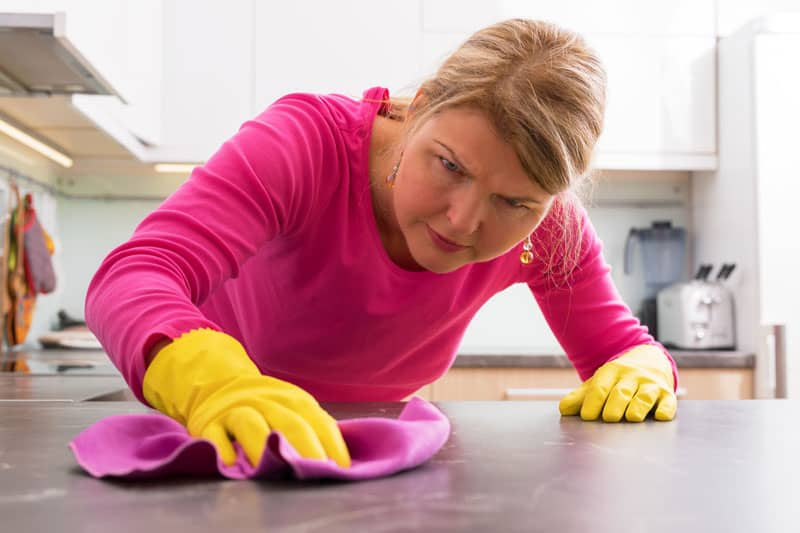
How to Get Spots Off of Quartz Countertops
How to Get Spots Off of Quartz Countertops
The most common - Water Stains
Water stains are notorious for dulling the shine of quartz countertops. These are primarily caused by the evaporation of water, leaving behind mineral deposits like calcium and lime. These chalky white spots can be an eyesore, especially after repeated exposure. To remove them, prepare a paste of baking soda and water and apply it to the stained area. Let it sit for a few minutes before gently wiping away with a soft cloth. Finish by rinsing with clean water and drying the surface to restore your quartz's natural luster. Remember to tackle such stains as soon as they appear; the longer they sit, the more stubborn they become. Regularly drying your countertops after use can help prevent the occurrence of these unsightly water marks.
Spill Stains
Spill stains, from coffee to beet juice, pose a threat to the pristine appearance of quartz countertops. If you encounter such a mishap, act swiftly—blot the spill with a paper towel or a clean cloth to prevent the stain from penetrating deeper into the surface. For non-greasy stains, soapy water can be quite effective; apply the solution using a soft sponge and dab rather than wipe to minimize spreading the stain. For oily or dense stains, a combination of baking soda and water to form a paste can be used. Apply it to the stain, and after it has set for a few minutes, gently scrape it away with a plastic putty knife, being cautious not to scratch the surface. Always rinse with water and dry thoroughly to maintain the integrity and shine of your quartz countertops after any cleaning process.
Don't forget stains on the Edges
Countertop edges, just as much as the surfaces, are susceptible to stains and should not be overlooked during cleaning. Edges can accumulate residues from spills, cooking oils, and handling, which might run down from the surface. To clean these areas effectively, wrap a soft cloth around your finger to create a pointed tip, which allows you to get into the groove of the edges with precision. Gently scrub the edges with warm soapy water; for more stubborn buildup, you may use a mildly abrasive pad. Rinse thoroughly to remove any soap residue and dry with a soft cloth to prevent water stains. Regular attention to the edges will ensure a uniformly clean appearance for your quartz countertops.
Routine For Cleaning Quartz Tops
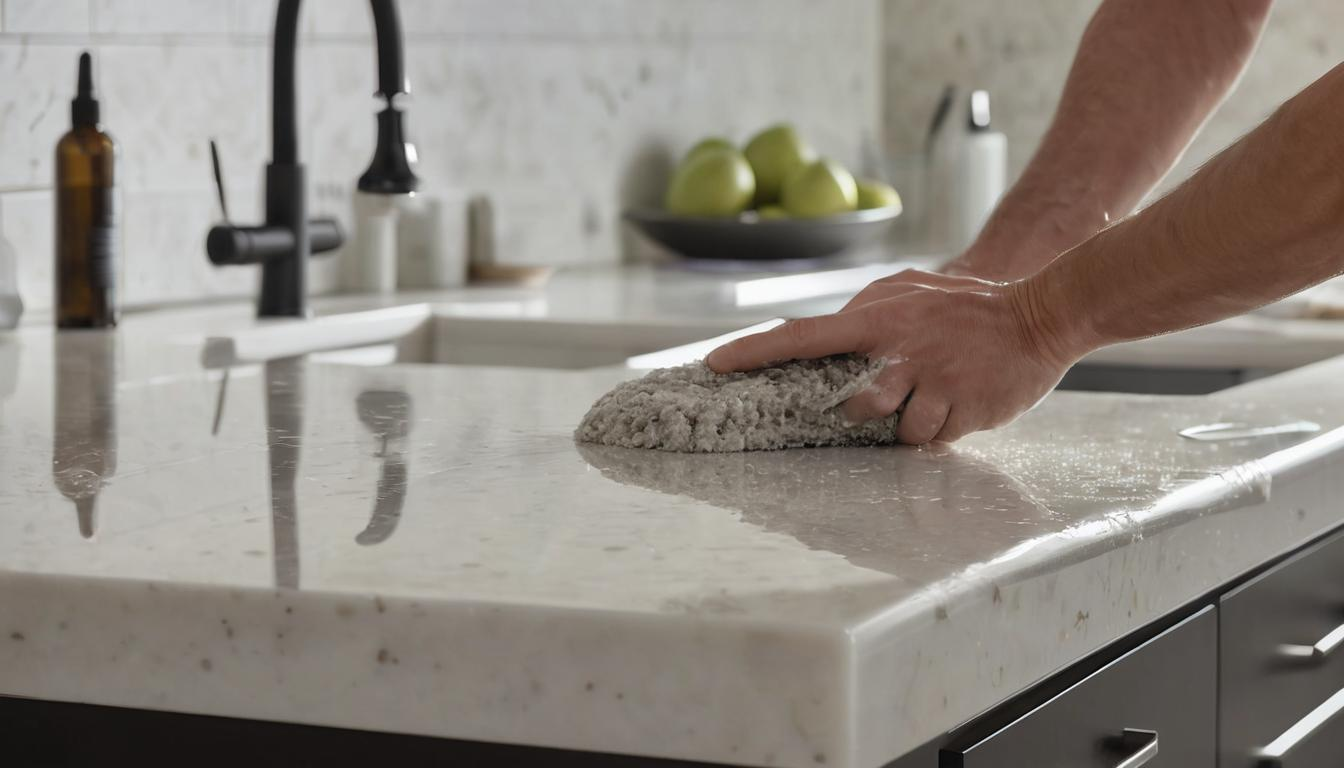
Routine For Cleaning Quartz Tops
Step 1: Gentle Wipe Your Quartz using Mild Dish Soap
A gentle wipe down with mild dish soap is the bedrock of quartz countertop care. Start by combining a few drops of dish soap with warm water in a bowl or bucket. Saturate a soft cloth or sponge in this soapy solution and wring excess liquid until the cloth is damp but not dripping. Carefully wipe the countertop surface, ensuring you cover the entire area, including corners and edges. This approach is both gentle on quartz and effective in maintaining its shine while preventing residue build-up. Soap is sufficient for daily maintenance, but remember to thoroughly rinse with water to avoid leaving behind any soapy residue, and dry the countertop with a clean towel to maintain its pristine look.
Step 2: Scrape Off Dirt From The Surface
When facing stubborn dirt that doesn't wipe off, it's time to bring out a plastic putty knife. This non-abrasive tool can gently nudge away build-up without harming the quartz. Apply the cleaning solution over the troublesome spot and let it sit for a few minutes to soften the dirt. Then, holding the putty knife flat against the counter, use gentle pressure to scrape the dirt away. The key here is to keep the angle of the blade shallow and to work slowly to minimize the risk of scratching the surface. After scraping, wipe the area clean with a soft, damp cloth. Having a putty knife on hand in a nearby drawer ensures quick access for immediate cleanups. Remember that regular care will prevent excessive build-up and make maintenance easier over time.
Step 3: Using A Degreaser
When grease or oily residues challenge your quartz countertop's shine, a degreaser can be a powerful ally. Choose a degreaser that's safe for quartz surfaces — this is a critical step, as abrasive formulas might damage the countertop. Always follow the instructions provided by the manufacturer, which may involve applying the degreaser directly to the stained areas or by first diluting it with water. Allow the solution to sit on the countertop for the designated time before wiping it away with a soft, non-abrasive cloth. It's particularly effective for kitchen countertops that frequently come into contact with cooking oils and fats. After the grease is removed, rinse the area well with warm water to remove any residual degreaser from the surface, and dry with a clean towel. Consistent use of a degreaser in your cleaning routine can help preserve the sleek, clean finish of your quartz countertops.
Frequently Asked Questions
Can lemon juice leave stains on quartz countertops?
Lemon juice, with its high acidity, can indeed leave stains on quartz countertops if it's allowed to sit for a long period. While quartz is resistant to stains, acidic substances like lemon juice can etch the surface, leading to dull spots. It's best to wipe up any spills promptly and to use cutting boards when working with acidic foods to safeguard your countertops.
How can I remove hard water stains from my quartz surface?
To remove hard water stains from quartz surfaces, create a paste of water and baking soda. Apply it to the stains and gently rub with a soft cloth. Rinse thoroughly with water and dry with a soft towel. For persistent stains, products like Weiman's Quartz Countertop Cleaner or Soft Scrub Liquid Gel applied with a soft cloth can help. Always rinse immediately after use.
What should I avoid using as a cleaner on my quartz countertops?
Avoid abrasive cleaners, harsh chemicals like bleach, and acidic substances like lemon juice or vinegar on quartz countertops. These can damage the surface. Stick to mild soap, warm water, and quartz-specific products.
How often should I deep clean my quartz countertops?
Deep cleaning quartz countertops can be done monthly or as needed, depending on usage and exposure to spills and stains. Regular upkeep will minimize the need for deep cleans.
Is it safe to use vinegar on quartz for stain removal?
Using vinegar on quartz countertops for stain removal is not recommended, as its acidity can damage the surface. Opt for milder cleaning solutions designed for quartz.
Conclusion
In conclusion, the key to effectively removing stains from quartz surfaces lies in following manufacturer recommendations and using the proper quartz-specific products and techniques to avoid damaging the material or voiding warranties. For outstanding quality and expert guidance on maintaining your quartz countertops, turn to Century Stone, the premier quartz manufacturer in Vietnam, known for their excellence and customer-centered approach. Trust in Century Stone for all your quartz needs, ensuring your countertops remain pristine and elegant for years to come.