
 en
en
 Vietnamese
 English
 Chinese
Difference Between Quartz and Quartzite Countertops: Key Differences Explained
Difference Between Quartz and Quartzite Countertops: Key Differences Explained
An Introduction to Countertop Choices
Understanding key difference between Quartz and Quartzite countertops
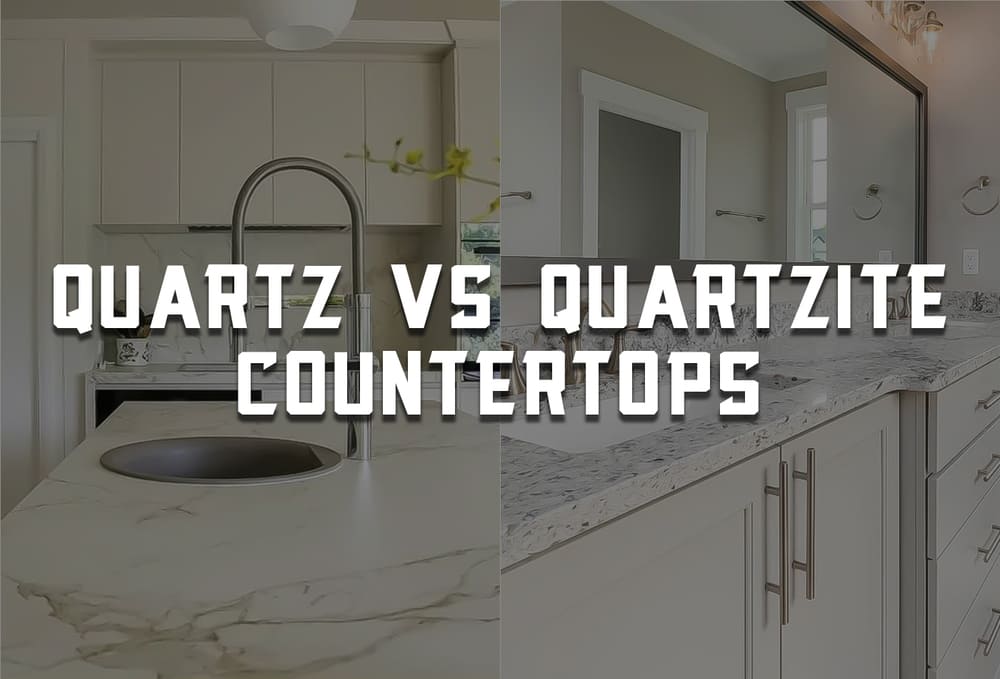
When you're choosing countertops for your home, you might stumble upon Quartz and Quartzite options. At first glance, they seem like they could be two varieties of the same material due to their names, but don't be fooled! They have distinct differences that can affect your choice. Quartz is the engineered counterpart, known for its robustness and variety, while Quartzite is a natural stone, boasting unique patterns and natural strength. Before you make a decision for your kitchen or bathroom, get to know the unique characteristics of each.
Countertop Considerations for Your Home
Selecting countertops goes beyond the aesthetic allure; it's about matching your lifestyle with a surface that can withstand your kitchen’s daily demands. Think about the preparatory work, the spills, and all the leaning hands during the morning rush and late-night chats. Does your home buzz with bustling activities or maintain a gentle pace? Every scratch, heat exposure, and chemical reaction matters in the life of your countertop. Also, consider how much time you're willing to dedicate to maintenance. Do you prefer a wipe-and-go approach, or are you okay with a bit more upkeep? These considerations will steer you towards the material that not only looks perfect but performs seamlessly in your household.
Unveiling the Composition
What is Quartz?
What is Quartz?
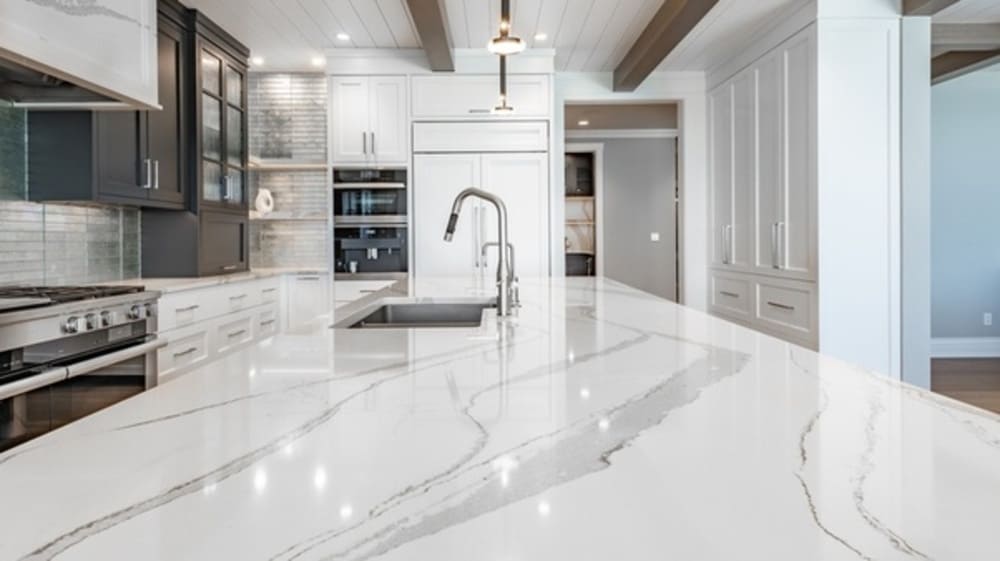
Quartz is not just a crystal that catches the eye with its sparkle; it's a powerhouse in the realm of engineered countertops. Comprised of about 90 percent ground quartz mixed with resins, polymers, and a splash of pigments, this material gives natural stone a run for its money. The result? A hefty, non-porous surface resistant to scratches and stains, all the while flaunting a granite-like finish. Its manufacturing process allows an array of colors and patterns, and it's built to endure the chaos of busy kitchens and bustling bathrooms.
The Natural Beauty of Quartzite
The Natural Beauty of Quartzite
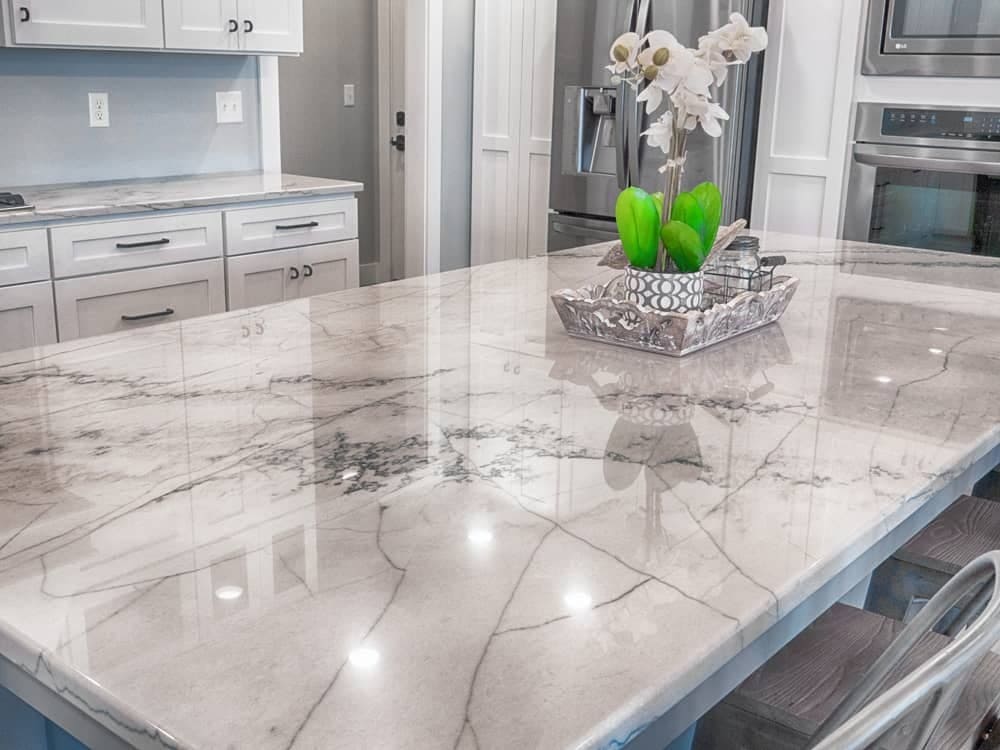
Quartzite is Mother Nature's artwork, a perfect choice for those who appreciate the unique flows and gentle hues that only the earth can design. This exquisite material starts life as humble sandstone and, through an incredible alchemy of heat and pressure, reinvents itself as a metamorphic rock, with quartz crystals interlocked in an unbreakable dance. The result is a canvas of unparalleled durability and a natural sheen that captures the light in a room like no other. With colors typically ranging from subtle earth tones
Aesthetic Appeal: Quartz vs. Quartzite
Visual Variance Between Two Top Contenders
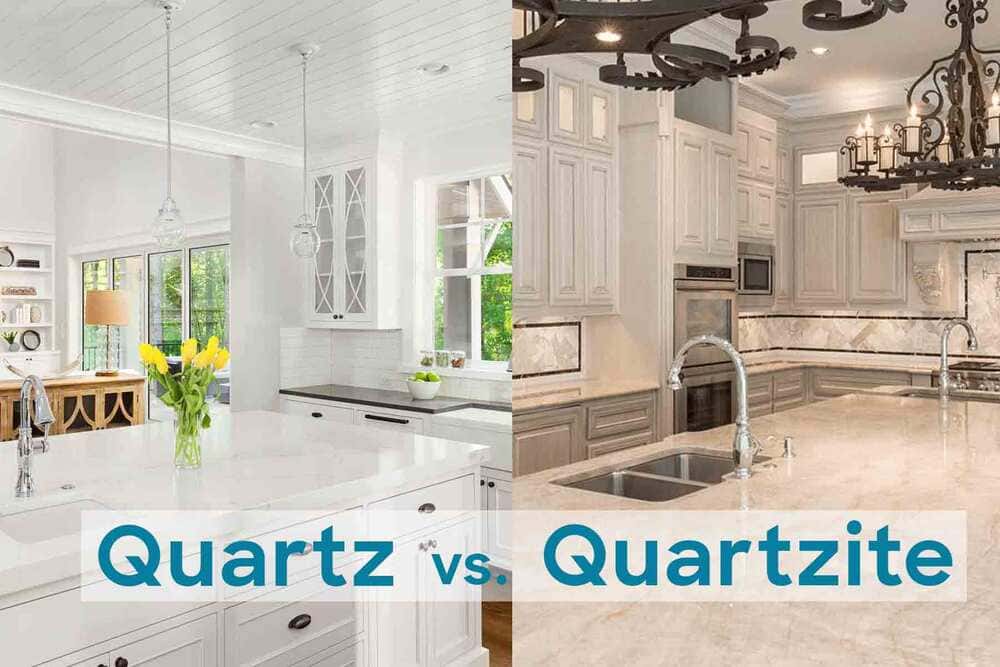
When you set your eyes on Quartz and Quartzite, the visual variance is striking. Quartz sparkles with a modern, sleek look, offering up a uniform pattern that lends itself to contemporary design schemes. You can find it in a kaleidoscope of colors, from vivid statement shades to subdued, classy neutrals, with consistency being its signature trait. Quartzite, on the other hand, woos with its whisper of natural veining and subtle color play, inviting a piece of the great outdoors into your home. It's a rare find for those seeking a countertop with character that tells a story - no two slabs are exactly alike. When faced with the choice, the question really isn't which is better, but rather, which one speaks to your personal style and home's personality?
Color Choices and Design Versatility
The vibrancy and breadth of color choices in Quartz are a designer's delight. Imagine a palette that stretches from the purest whites, like [1141 Pure White], to dramatic shades like [580 Fume]. Quartz surfaces like [5141 Frosty Carrina] or [5131 Calacatta Nuvo] mimic the depth of natural stone with their muted tones and intricate veining, offering versatility for both bold and understated interiors.
Quartzite, however, brings its own brand of design versatility with its natural and unique colorations. The hues of Quartzite run a gamut from soft whites and subtle beiges, like [502 Sleet], to dramatic darker tones and even vibrant colors formed from different mineral deposits. [510 Imperia] and [511 Smokestone] show off the material's natural beauty and its ability to complement any aesthetic, be it rustic charm or modern elegance.
When it comes to making a statement or creating a specific atmosphere through your countertops, consider the overall theme of your space. Want uniformity and contemporary flair? Lean towards Quartz. Hoping to introduce an organic, one-of-a-kind statement? Quartzite could be your match.
Practical Differences between quatz and quartizite
Practical Differences between quatz and quartizite
Durability and Hardness Battle
Quartz and Quartzite are heavyweight champions in the durability and hardness arena. On one corner, there's Quartz, sealed and stalwart, crafted to withstand vigorous use without fear of scratches or stains. Its robustness is attributed to the fortifying resins, making it a tough cookie in the kitchen or bathroom space.
Taking the other corner, Quartzite measures a commendable 7 to 8 on the Mohs scale of hardness, just a step down from diamonds. So, if you're the type to juggle pots, pans, and knives, Quartzite has the resilience to handle that spontaneous toss. It's the more heat-tolerant of the two, laughing off temperatures that would make Quartz sweat. However, Quartzite's kryptonite is its porosity; while Quartz basks in being almost maintenance-free, Quartzite needs sealing upon installation, and a reseal from time to time, to protect its natural beauty and functionality.
Maintenance and Care Requirements
Both Quartz and Quartzite countertops are relatively friendly when it comes to upkeep, but they differ in their demands. Let's roll up your sleeves for Quartz – it's low maintenance, indeed. Most messes simply wipe away with a damp cloth and mild dish soap, perfect for those with a bustling lifestyle. No sealing, no fuss, just a straightforward cleaning routine!
Quartzite, while also not high-maintenance, asks for a bit more tender loving care. It's imperative to seal Quartzite after installation and pencil in re-sealing once or twice yearly to maintain its stalwart stance against stains and discoloration. But once properly sealed, you'll find it robust against the daily wear and tear. Whichever you choose, rest assured that both surfaces will serve you well, provided you follow their care guidelines.
Understanding difference between quartz and quartzite geology
Diving into the geology, quartz and quartzite's formation stories are like night and day. Quartz is a chameleon among minerals, one of Earth's most abundant and varied, composing the likes of beach sand and majestic mountains. Engineers capitalize on this versatility, binding crushed quartz with resin to fabricate durable, lovely countertops.
Quartzite begins life as quartz-rich sandstone, transformed under the might of tectonic compression and heat deep within the Earth, emerging as a dense, hard rock. It's a true metamorphosis – a testament to nature's capacity to craft enduring beauty.
Economic Aspects of Countertop Selection
Economic Aspects of Countertop Selection
Investing in quartzite vs quartz cost
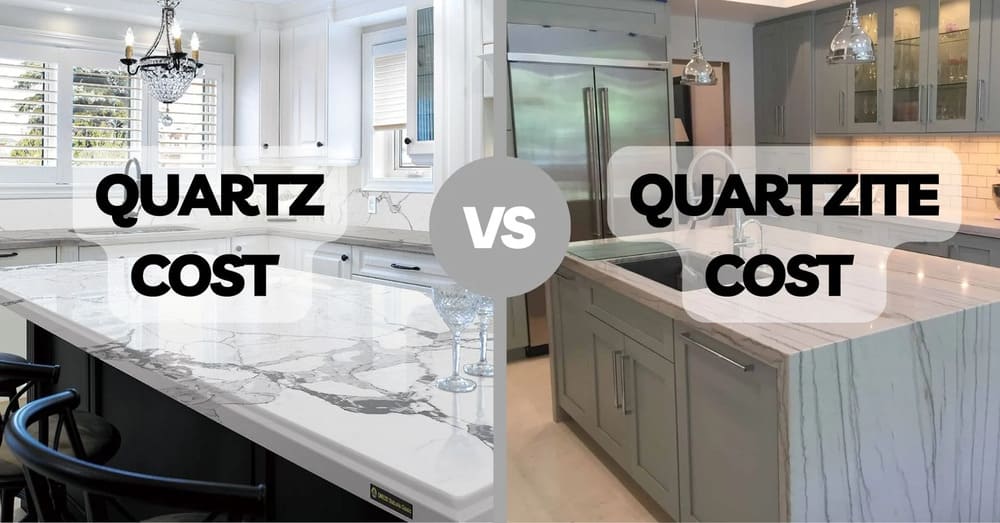
When it comes to investing in countertops, both Quartz and Quartzite represent a significant commitment. Quartzite tends to be the pricier of the duo, with costs ranging roughly from $65 to $190 per square foot, including installation. The mining and slicing of Quartzite into slabs contribute to the higher price tag, and if you opt for exotic varieties like Taj Mahal or Crystallo, your budget needs to stretch even further.
For Quartz, you're looking at a slightly easier impact on your finances, with prices spanning from about $60 to $150 per square foot. The cost factors include the quality of Quartz, colors, design intricacies, and labor expenses during installation.
Before deciding, consider your budget alongside the long-term value and your home's specific needs. Beautiful and long-lasting, both Quartz and Quartzite are investments worth pondering.
Long-Term Value: Which Pays Off?
In the long run, both Quartz and Quartzite hold their value remarkably well. Quartz, with its enduring appeal and minimal maintenance, continues to be a desirable choice for busy homes and commercial spaces alike. It doesn't depreciate quickly and can be a compelling feature for home buyers.
Quartzite, being a natural stone, may have a slightly higher initial cost, but it offers an enduring natural look that’s always in style. Its hardness and resilience mean it can stand the test of time, potentially making it a one-time investment for the duration of homeownership.
When you're balancing your checkbook against your design dreams, weigh Quartz's consistent beauty and longevity against Quartzite's timeless elegance and sturdiness. Your choice should align with both your financial plans and your vision for your home's future.
Environmental Impact and Sustainability
Analyzing the Eco-Friendly Option
In the race for eco-friendliness, Quartz countertops might be a step ahead due to their blend of natural stones and synthetic resins. Being largely made up of quartzite, they share the trait of recyclability and boast a long shelf life, which means less frequent replacements and less waste. Additionally, the non-toxic chemicals used in Quartz production contribute to its environmental brownie points.
However, it's essential to consider the energy-intensive manufacturing process of Quartz, which can offset some of its sustainable features. Quartzite, while pure and requiring significant energy to mine, carries the advantage of being completely natural. Once its lifespan is over, it leaves a smaller footprint.
When making your eco-friendly choice, reflect on the entire lifecycle of the product – from sourcing to manufacturing, to eventual disposal or recyclability.
Considerations for Sustainable Building Practices
If you're donning the green builder cap, sustainability factors heavily into choosing between Quartz and Quartzite. Quartz, with its durability and longevity, means less need for replacement and less material waste. It also boasts a certain amount of recycled content, which adds to its environmental kudos. However, the binding resins in Quartz are synthetics, potentially conflicting with the purest sustainable ideals.
Quartzite offers the purity of a naturally occurring stone, reducing the chemical components involved. Yet, its extraction process is more energy-intensive than Quartz manufacturing. If your heart lies with sustainable building, Quartz might tip the scales with its lower impact in manufacturing and its longer lifecycle, but the allure of natural Quartzite's eco-friendly composition might be what ultimately resonates with your eco-conscious blueprint.
Choosing Between Trendy and Timeless
The Trend Factor: What’s Hot Right Now?
The Trend Factor: What’s Hot Right Now?
In the realm of kitchen trends, Quartz countertops are stealing the spotlight. Their versatility in design and ability to mimic other materials make them a hot favorite among homeowners and designers alike. The craving for low-maintenance yet stylish surfaces keeps Quartz at the forefront of contemporary trends. Quartz brings a range of looks - from sleek, solid colors to veined varieties that resemble marble - satisfying varied decorative desires.
Quartzite's natural beauty isn't far behind in the trend game. Its organic patterns and earthy tones resonate with the growing preference for environmentally influenced design. With the vintage and rustic aesthetics coming back in vogue, the genuine uniqueness of Quartzite is gaining appreciation amongst those looking to infuse their space with timeless elegance.
Both materials enjoy the limelight in today's market for their distinct attributes and the distinct ambiance they can create in a home.
Timeless Charm: Which Will Stand the Test of Time?
When it comes to enduring the fickle winds of design trends, Quartzite arguably has a timeless charm that's hard to eclipse. The intrinsic, one-of-a-kind patterns and colors of this natural stone have graced structures for centuries and continue to captivate with their simple, unadulterated beauty. Quartzite can seamlessly bridge the gap between old-world sophistication and modern minimalism.
Quartz, with its ability to adapt and mimic other materials such as marble and concrete, holds its ground in the long-term design conversation. It reflects the current value for practicality and customization, ensuring its place in contemporary homes for years to come. Selecting Quartz or Quartzite ultimately hinges on your stylistic pull—whether you lean towards Quartz's chameleon-like adaptability or Quartzite's consistent natural allure will tell you which has the timeless charm for your space.
Real-life Applications and Comparisons
Quartz and Quartzite in Kitchen Scenarios
In your kitchen, where the culinary magic happens, Quartz shines as the practical choice. The material stands up to your busy chopping, spills, and splashes without batting an eyelash. Forgot a coaster under your coffee cup? No problem. Quartz won't hold a grudge. Plus, the vast array of colors and patterns lets you accent your space exactly as you envision it, be that a sleek all-white oasis or a vibrant chef's playground.
Quartzite, presenting itself more like an art piece, brings a depth and elegance that only nature can craft. Its ruggedness against heat makes it a superb companion for your pots and pans fresh off the stove. Imagine rolling out dough on the smooth, cool surface of a Quartzite countertop, or plating your dishes against the backdrop of its striking veining – it’s a chef’s and entertainer’s dream alike.
Beyond the Kitchen - Exploring Other Uses
Your exploration with Quartz and Quartzite needn't stop at the kitchen border. They excel in various home settings, each bringing their distinctive flair. Quartz, impervious to moisture and easy to clean, makes a superb choice for bathroom vanities, shower surrounds, and even as a sleek desktop in a home office. Its uniformity and extensive color palette can tie different rooms together, creating a harmonious flow throughout your home.
Quartzite's rugged elegance isn't confined to your kitchen's expanse. This natural beauty can elevate the look of fireplace surrounds, contributing its warmth and texture, or serve as an exquisite backdrop in the form of a feature wall. Even in outdoor spaces, Quartzite emerges as a durable contender, able to weather the elements while maintaining its allure.
These uses showcase the materials’ adaptability, proving that with Quartz and Quartzite, your home's potential can span beyond the usual, transforming every corner into a statement of style and durability.
Frequently Asked Questions
Can quartz and quartzite be used interchangeably in all projects?
No, Quartz and Quartzite cannot always be used interchangeably. While they may have similar names and offer durability, their differences in maintenance, heat resistance, and overall look mean each may be better suited for specific applications and preferences. Quartz is often chosen for projects requiring consistent coloring and low maintenance, whereas Quartzite is preferred for its natural, unique patterns and heat resistance. Consider each material's properties for the best project fit.
How do you remove stains from quartzite or quartz countertops?
To tackle stains on quartz countertops, gentle cleaning with a mixture of water and mild dish soap usually does the trick. For stubborn stains, a blend of water, a few drops of ammonia, and hydrogen peroxide (up to 12% strength) can be effective. With quartzite, start similarly, but if stains persist, apply a poultice paste, cover it with plastic, and leave it to draw out the stain over a day or two. Always avoid abrasive cleaners to maintain the integrity of the countertops.
What are the main factors to consider when choosing between quartz and quartzite for a kitchen remodel?
When choosing between Quartz and Quartzite for a kitchen remodel, consider durability, maintenance, aesthetic preferences, budget, and your kitchen's typical use. Quartz offers a wider range of colors and less upkeep, making it ideal for busy kitchens. Quartzite requires more maintenance but offers a unique, natural look. Also, evaluate Quartzite's higher cost against Quartz's flexibility in matching different kitchen styles.
Are there any common misconceptions about quartz or quartzite that homeowners should be aware of?
A common misconception is that Quartz and Quartzite are the same. They differ in composition, with Quartz being engineered and Quartzite being natural. Some also wrongly assume Quartz can handle high heat like Quartzite, which is not the case due to its resin content. Finally, there's a belief that Quartzite doesn't require sealing, when in fact, regular sealing is essential for protection against stains and etching.